1990 Slang Words
By Jessica Burns
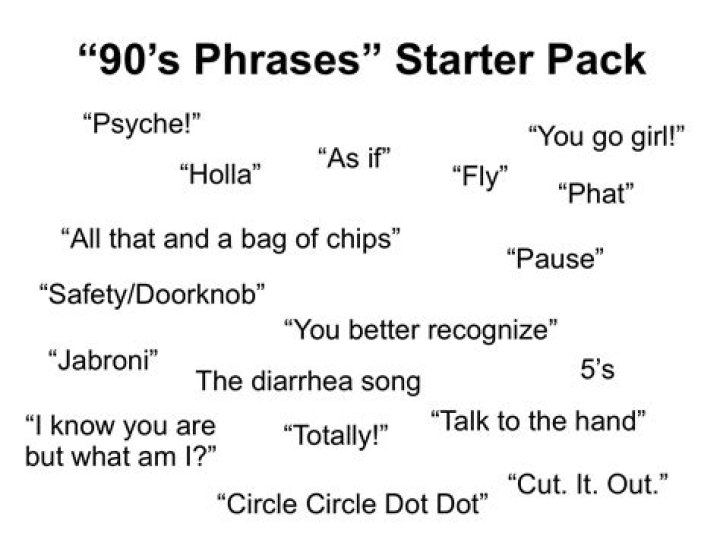
1990s slang words encapsulate the unique lexicon and cultural context of the decade, reflecting societal trends, technological advancements, and youth culture. Notable examples include "phat" (excellent), "gag me with a spoon" (expressing disgust), and "no duh" (a sarcastic affirmation).
These terms not only provide a glimpse into the past but also highlight the ever-evolving nature of language. They serve as a valuable resource for understanding the cultural nuances and linguistic creativity of a specific era.
Main Article Topics:
- Origins and influences of 1990s slang
- Common categories and themes
- Impact on popular culture
- Legacy and enduring influence
1990s Slang Words
1990s slang words offer a unique window into the cultural and linguistic landscape of the decade. Here are six key aspects that shed light on their significance:
- Innovation and Creativity: New words and phrases emerged, reflecting the rapidly changing technological and social landscape.
- Youth Culture: Slang was heavily influenced by youth culture, particularly hip-hop and skateboarding.
- Social Commentary: Slang often carried hidden meanings and served as a form of social commentary.
- Regional Variations: Slang terms varied widely across different regions, reflecting local cultures and experiences.
- Influence on Popular Culture: Slang words and phrases made their way into mainstream media, shaping popular culture.
- Historical Significance: 1990s slang provides a valuable record of the era's social, cultural, and linguistic trends.
These aspects are interconnected and illustrate the multifaceted nature of 1990s slang. For example, the slang term "phat" (meaning "excellent") exemplifies the creativity and youth influence of the time. Its widespread adoption in popular culture demonstrates its impact beyond its original context. Furthermore, slang words like "no duh" (expressing sarcasm) offer a glimpse into the social commentary embedded within the language of the decade.
Innovation and Creativity
The 1990s witnessed a surge of innovation and creativity in language, particularly in the realm of slang. The rapidly evolving technological and social landscape of the decade provided fertile ground for the emergence of new words and phrases that captured the zeitgeist of the time.
One key factor driving this linguistic innovation was the rise of digital communication. The widespread adoption of the internet, mobile phones, and instant messaging platforms created new spaces for language to evolve and spread. Slang terms such as "web surfing," "LOL," and "BRB" emerged to describe the unique experiences and challenges of this new digital world.
Another significant influence on 1990s slang was the growing global interconnectedness and cultural exchange. The fall of the Berlin Wall and the advent of satellite television and the World Wide Web exposed people to different cultures and languages, leading to the adoption and adaptation of foreign words and phrases. Terms like "bling" (from Jamaican Patois) and "kawaii" (from Japanese) became part of the mainstream slang lexicon.
Understanding the connection between innovation and creativity and 1990s slang words is crucial for appreciating the dynamic and ever-evolving nature of language. It highlights the role of social and technological changes in shaping linguistic expressions and provides insights into the cultural and historical context of a particular era.
Youth Culture
Youth culture played a pivotal role in shaping the landscape of 1990s slang. The rise of hip-hop and skateboarding subcultures, with their unique styles, values, and language, had a profound impact on the slang vocabulary of the decade.
Hip-hop music, with its focus on rhythm, rhyme, and storytelling, introduced a wealth of new slang terms and phrases. Words like "bling" (jewelry), "phat" (excellent), and "diss" (insult) became part of the mainstream lexicon. Skateboarding culture also contributed its own set of slang, with terms such as "gnarly" (difficult), "rad" (good), and "shred" (skate well) gaining widespread popularity.
The influence of youth culture on 1990s slang is significant because it highlights the power of youth as agents of linguistic change. The slang terms and phrases that emerged from these subcultures reflected the values, experiences, and aspirations of young people, providing a unique window into the cultural landscape of the decade.
Understanding the connection between youth culture and 1990s slang words is essential for gaining a comprehensive understanding of the era's linguistic and cultural dynamics. It sheds light on the role of youth in shaping language and the ways in which slang can serve as a marker of cultural identity.
Social Commentary
1990s slang words were not merely linguistic curiosities; they often carried hidden meanings and served as a form of social commentary. This was particularly true for slang that emerged from marginalized or countercultural groups, such as the LGBTQ+ community and the hip-hop scene.
For example, the term "shade" (meaning "insult" or "disrespect") originated in the ballroom culture of the LGBTQ+ community. It encapsulated the subtle and indirect ways in which members of the community expressed their disapproval or criticism of others, often due to societal stigma and discrimination.
Similarly, hip-hop slang terms like "bling" (jewelry) and "phat" (excellent) carried social commentary on materialism and consumerism within the African American community. These terms reflected the experiences and aspirations of young people in urban areas, who often used slang as a way to express their unique cultural identity and critique societal norms.
Understanding the social commentary embedded in 1990s slang words is crucial for gaining a deeper understanding of the cultural and social landscape of the decade. It highlights the role of slang as a tool for marginalized groups to express their perspectives and challenge mainstream narratives.
Moreover, recognizing the social commentary in slang can help us appreciate the richness and nuance of language. It reminds us that words can carry more than their literal meaning and can serve as powerful vehicles for social critique and cultural expression.
Regional Variations
The diversity of 1990s slang words across different regions highlights the close relationship between language and local culture. Slang often emerges from the unique experiences, values, and perspectives of a particular community, and this was especially true in the 1990s.
- Geographical Influences: Slang terms can be influenced by the physical environment and geography of a region. For example, in coastal areas, slang related to surfing and fishing may be more common, while in urban areas, slang related to hip-hop culture may be more prevalent.
- Cultural Heritage: Regional history and cultural heritage can also shape slang. In areas with a strong cultural identity, slang terms may reflect local traditions, folklore, or historical events.
- Social Dynamics: The social dynamics of a region can influence slang. For example, in regions with a strong sense of community, slang may be used to create a shared sense of belonging and in-group identity.
- Language Contact: Regions where multiple languages are spoken may develop unique slang that blends elements from different languages. This is common in multilingual cities or areas with a history of immigration.
Understanding the regional variations in 1990s slang words provides insights into the diverse cultural landscape of the decade. Slang can serve as a window into the local experiences, values, and identities of people from different parts of the world.
Influence on Popular Culture
The influence of 1990s slang words and phrases on popular culture cannot be overstated. Slang, once confined to specific subcultures and regions, made its way into mainstream media through various channels, including music, movies, television, and advertising.
One of the primary reasons for this widespread adoption was the rise of hip-hop culture in the 1990s. Hip-hop artists used slang extensively in their lyrics, which reached a global audience. Terms like "bling," "phat," and "diss" became part of the mainstream vocabulary, popularized by artists such as Snoop Dogg, Tupac Shakur, and The Notorious B.I.G.
Another factor contributing to the influence of 1990s slang was the popularity of teen movies and television shows. These productions often featured characters who spoke in slang, making it more accessible and relatable to young audiences. Movies like "Clueless" and "Mean Girls" helped popularize terms like "as if," "whatever," and "fetch."
The practical significance of understanding the influence of 1990s slang on popular culture lies in its ability to provide insights into the cultural and social landscape of the decade. Slang reflects the values, attitudes, and experiences of a particular time and place. By studying 1990s slang, we can gain a deeper understanding of the cultural shifts and trends that shaped the era.
In conclusion, the influence of 1990s slang words and phrases on popular culture was profound. Slang transcended its origins and became a defining characteristic of the decade, shaping the way people communicated and interacted with popular media. Understanding this influence provides valuable insights into the cultural and social context of the 1990s.
Historical Significance
1990s slang words serve as a valuable historical record, capturing the social, cultural, and linguistic trends of the decade. They offer insights into the values, attitudes, and experiences of people during a transformative period.
One of the key reasons for the historical significance of 1990s slang is its role in reflecting the rise of youth culture. Slang terms such as "grunge," "slacker," and "whatever" encapsulated the disillusionment and apathy felt by many young people in the post-Cold War era. These terms became part of a larger cultural movement that challenged traditional norms and celebrated individuality.
Furthermore, 1990s slang provides valuable insights into the technological advancements of the era. The widespread adoption of the internet and mobile phones led to the emergence of new slang terms related to digital communication, such as "surfing the web," "LOL," and "BRB." These terms not only reflected the changing landscape of communication but also shaped the way people interacted and formed relationships.
Understanding the historical significance of 1990s slang is crucial for gaining a comprehensive understanding of the cultural and social context of the decade. By studying these slang terms, researchers and historians can gain insights into the values, attitudes, and experiences of people during a pivotal period in history.
## Frequently Asked Questions on 1990s SlangThis section addresses frequently asked questions regarding 1990s slang, providing concise and informative answers.
Question 1: What are the defining characteristics of 1990s slang?
Answer: 1990s slang is characterized by its creativity, youth influence, use as social commentary, regional variations, impact on popular culture, and historical significance.
Question 2: How did youth culture influence the development of 1990s slang?
Answer: Youth culture, particularly hip-hop and skateboarding subcultures, played a significant role in shaping 1990s slang. Terms emerged that reflected their values, experiences, and aspirations.
Question 3: What role did slang play in expressing social commentary during the 1990s?
Answer: Slang served as a tool for marginalized groups, such as the LGBTQ+ community, to express their perspectives and challenge societal norms. It allowed for subtle and indirect forms of criticism or resistance.
Question 4: How did regional factors contribute to the diversity of 1990s slang?
Answer: Regional variations in slang reflect local experiences, values, and cultural heritage. Geographical influences, social dynamics, and language contact played a role in shaping regional slang variations.
Question 5: What impact did 1990s slang have on popular culture?
Answer: 1990s slang permeated mainstream media through music, movies, and television, shaping popular culture. It influenced youth culture, fashion, and language, leaving a lasting impact on contemporary slang and popular culture.
Question 6: How does studying 1990s slang contribute to our understanding of the era?
Answer: 1990s slang provides valuable insights into the social, cultural, and linguistic landscape of the decade. It offers a glimpse into the values, attitudes, and experiences of people during a transformative period in history.
Summary: 1990s slang is a rich and diverse linguistic phenomenon that reflects the cultural and social dynamics of the era. Understanding its characteristics and significance helps us appreciate the creativity, diversity, and historical value of slang in shaping language and culture.
Transition: The following section will delve into specific examples and case studies of notable 1990s slang words and phrases.
Tips for Understanding and Using 1990s Slang
1990s slang played a significant role in shaping the cultural and linguistic landscape of the decade. Here are some tips for understanding and using 1990s slang effectively:
Tip 1: Explore Cultural Context: To fully grasp the meaning and usage of 1990s slang, it's essential to understand the cultural context that influenced its development. Consider the era's social, political, and technological advancements.
Tip 2: Seek Regional Variations: 1990s slang often varied across different regions, reflecting local cultures and experiences. Be aware of regional variations to avoid misinterpretation and enhance your understanding.
Tip 3: Embrace Youth Influence: Youth culture, particularly hip-hop and skateboarding, had a profound impact on 1990s slang. To fully comprehend the slang of the era, consider the values, experiences, and aspirations of young people.
Tip 4: Identify Social Commentary: 1990s slang often carried hidden meanings and served as a form of social commentary. Pay attention to the subtle nuances and historical context to uncover the deeper messages embedded within slang terms.
Tip 5: Respect Historical Significance: 1990s slang is a valuable historical record, offering insights into the era's cultural and social dynamics. Treat slang terms with respect, understanding their significance in shaping the decade's linguistic landscape.
Tip 6: Use Appropriately: While exploring 1990s slang can be fascinating, it's important to use it appropriately. Consider the context and audience to avoid misunderstandings or causing offense.
Summary: By following these tips, you can gain a deeper understanding of 1990s slang, appreciate its cultural significance, and use it effectively in your own communication.
Conclusion
Our exploration of 1990s slang words has revealed a rich and multifaceted linguistic phenomenon that shaped the cultural and linguistic landscape of the decade. From its origins in youth culture to its impact on popular media and its historical significance, 1990s slang offers valuable insights into the values, attitudes, and experiences of the era.
The creativity, diversity, and enduring influence of 1990s slang remind us of the power of language to reflect and shape our social and cultural realities. By understanding and appreciating the significance of slang, we gain a deeper understanding of the past and a greater appreciation for the ever-evolving nature of language.
Does Ghostface Have A Baby With Rza Sister
Who Is Lil Mabu Signed To
Eighties Rock Bands List
Cathy Thinking Out Loud Slammin' 90's Slang Don't like it? Talk to
"90's Phrases! All That And A Bag Of Chips! 1990's sayings. " Sticker
90s slang by TheFreshKnight on DeviantArt