Names For Short People
By Jessica Burns
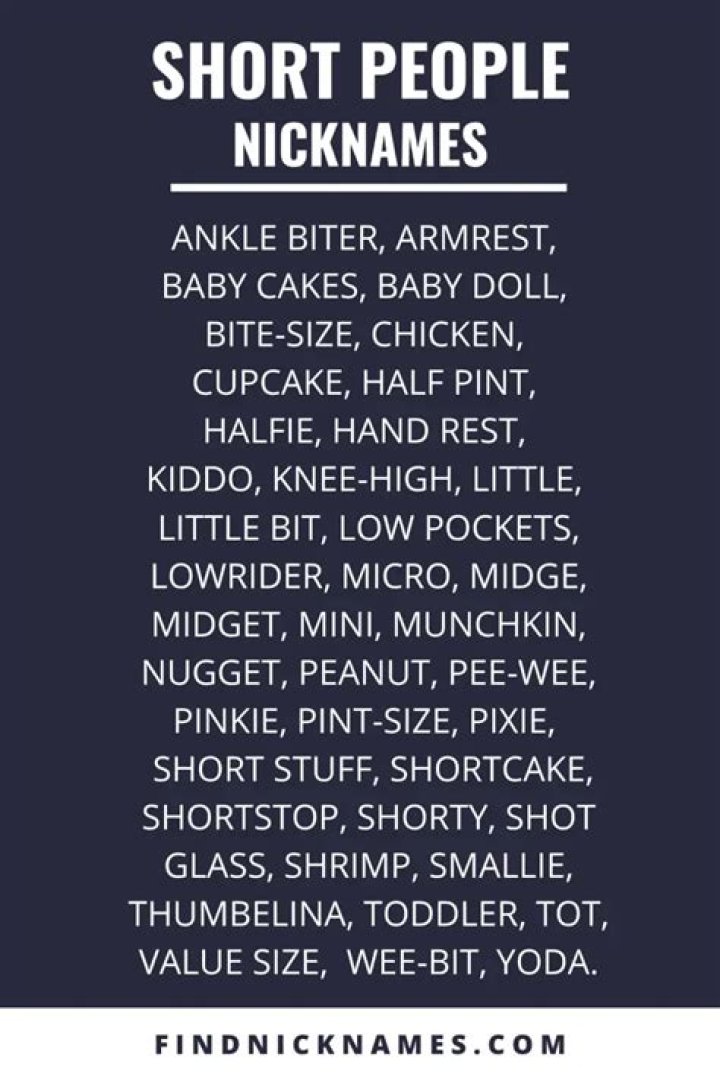
"Names for short people" refer to nicknames, pet names, or other informal names given to individuals who are of short stature. These names can vary widely depending on the culture, context, and personal preferences of the individuals involved.
Short people nicknames can serve various purposes. They can be used to express affection, humor, or camaraderie. In some cases, they may also be used to playfully tease or poke fun at someone's height. However, it is important to note that using derogatory or hurtful nicknames is never acceptable.
When choosing a nickname for a short person, it is important to consider their feelings and preferences. Some people may be comfortable with playful nicknames, while others may prefer to be called by their given name or a more formal title. It is always best to err on the side of caution and choose a nickname that is respectful and inoffensive.
Names for Short People
Names for short people, often referred to as nicknames or pet names, serve various purposes and hold cultural significance. They can express affection, humor, or camaraderie, and may also be used to playfully tease or poke fun at someone's height.
- Affectionate: Shorty, Peanut, Munchkin
- Humorous: Pocket Rocket, Mini Me, Knee High
- Cultural: Hobbit, Leprechaun, Dwarf
- Teasing: Runt, Shrimp, Squirt
- Historical: Tom Thumb, General Tom Thumb
- Literary: Thumbelina, The Borrowers
The choice of nickname for a short person should consider their feelings and preferences. Some may prefer playful nicknames, while others may prefer to be called by their given name or a more formal title. It is always best to err on the side of caution and choose a nickname that is respectful and inoffensive.
Affectionate
Affectionate nicknames for short people, such as "Shorty," "Peanut," and "Munchkin," serve to express endearment and familiarity. These nicknames often highlight the person's diminutive size in a playful and loving way. By using affectionate nicknames, individuals can convey a sense of closeness and acceptance, fostering a positive and supportive environment.
The use of affectionate nicknames for short people is not limited to specific cultures or regions; it is a common practice found in many parts of the world. These nicknames can be used by family members, friends, and even romantic partners. In some cases, individuals may even adopt these nicknames as a way of self-identification, embracing their height as a unique and endearing characteristic.
Overall, affectionate nicknames for short people play a significant role in creating a sense of community and belonging. They allow individuals to express their affection and support for one another, while also celebrating the diversity of human physical characteristics.
Humorous
Humorous nicknames for short people, such as "Pocket Rocket," "Mini Me," and "Knee High," serve to evoke laughter and lightheartedness. These nicknames often use exaggeration or wordplay to create a humorous effect, highlighting the person's diminutive size in a playful and amusing way.
- Exaggeration: "Pocket Rocket" implies that the person is small and fast, like a rocket that can fit in a pocket.
- Wordplay: "Mini Me" is a humorous play on the phrase "mini me," which refers to a smaller version of oneself.
- Physical Characteristics: "Knee High" directly references the person's height, suggesting that they are so short that they barely reach knee level.
Humorous nicknames for short people can serve several purposes. They can be used to playfully tease or poke fun at someone's height, but they can also be used to express affection and camaraderie. In some cases, individuals may even adopt these nicknames as a way of self-identification, embracing their height as a unique and humorous characteristic.
Overall, humorous nicknames for short people play a significant role in creating a sense of community and belonging. They allow individuals to express their affection and support for one another, while also celebrating the diversity of human physical characteristics.
Cultural
The connection between "Cultural: Hobbit, Leprechaun, Dwarf" and "names for short people" lies in the portrayal of fictional characters in literature, folklore, and mythology. These characters, often depicted as being short in stature, have become iconic representations of short people in various cultures.
In the fantasy realm of J.R.R. Tolkien's Middle-earth, hobbits are a race of small, humanoid creatures known for their love of food, comfort, and adventure. Their short stature is an integral part of their identity and culture, and the name "hobbit" itself evokes images of smallness and coziness.
Similarly, in Irish folklore, leprechauns are mischievous creatures often depicted as being short and wearing green clothing. Their association with pots of gold and rainbows has made them synonymous with good luck and prosperity, further enhancing their cultural significance as representatives of short people.
In Norse mythology, dwarves are skilled craftsmen known for their work with metals and precious stones. Their short stature and long beards are distinctive features that have become ingrained in popular culture. The name "dwarf" has also been used to refer to people with dwarfism, a genetic condition that results in short stature.
The cultural significance of these characters as "names for short people" lies in their representation of the diversity of human physical characteristics. They challenge societal norms and stereotypes associated with height, promoting acceptance and inclusivity. By embracing these characters and their unique traits, we can foster a more understanding and respectful society.
Teasing
Teasing nicknames for short people, such as "Runt," "Shrimp," and "Squirt," often carry a negative connotation and can be hurtful or disrespectful. These nicknames are typically used to mock or belittle someone's height, emphasizing their perceived inadequacy or weakness.
The use of teasing nicknames can have a significant impact on individuals, particularly children and adolescents who are still developing their self-esteem and body image. Being teased about their height can lead to feelings of shame, embarrassment, and social isolation. In some cases, it can even contribute to mental health issues such as anxiety and depression.
It is important to recognize that teasing nicknames for short people are not harmless fun. They perpetuate harmful stereotypes and contribute to a culture of body shaming. Instead, we should focus on promoting acceptance and inclusivity, regardless of a person's height or any other physical characteristic.
Historical
The connection between "Historical: Tom Thumb, General Tom Thumb" and "names for short people" lies in the cultural fascination with individuals of unusually short stature throughout history. Tom Thumb, born Charles Stratton in 1838, was an American dwarf who became a renowned entertainer and public figure during the 19th century.
Tom Thumb's diminutive size, standing at only 25 inches tall, made him an object of curiosity and fascination. He was exhibited as a "human curiosity" in circuses and sideshows, where audiences marveled at his small stature and charming demeanor. Tom Thumb's fame extended beyond the United States, and he toured extensively throughout Europe, becoming a global celebrity.
The nickname "Tom Thumb" became synonymous with short people, and it is still occasionally used today as a playful or affectionate term. However, it is important to note that the use of the term "midget" or "dwarf" as a general label for short people is considered outdated and disrespectful. Today, the preferred term is "person with dwarfism" or "little person."
The historical significance of Tom Thumb and other individuals of short stature lies in their role in challenging societal norms and perceptions of physical difference. Their public presence and performances helped to raise awareness and understanding of dwarfism, and they paved the way for greater acceptance and inclusion of people with disabilities.
Literary
The connection between "Literary: Thumbelina, The Borrowers" and "names for short people" lies in the portrayal of diminutive characters in literature. These characters, often depicted as being exceptionally small in stature, have become iconic representations of short people in the realm of fiction.
- Thumbelina: In the classic fairy tale by Hans Christian Andersen, Thumbelina is a tiny girl who is only an inch tall. Her diminutive size leads to a series of adventures and challenges, but she ultimately finds love and happiness with a prince who is also small in stature.
- The Borrowers: In the popular children's book series by Mary Norton, the Borrowers are a family of tiny people who live in the walls of a large house. They must borrow items from the human occupants in order to survive, and their small size allows them to remain hidden from view.
The literary portrayal of Thumbelina and the Borrowers has had a significant impact on the way we perceive short people in real life. These characters have helped to normalize the idea of people with dwarfism or other forms of short stature, and they have shown that even the smallest individuals can achieve great things.
FAQs on Names for Short People
This section addresses frequently asked questions and misconceptions surrounding names used for individuals of short stature.
Question 1: What is the preferred terminology for referring to short people?
The preferred term is "person with dwarfism" or "little person." The terms "midget" and "dwarf" are outdated and considered disrespectful.
Question 2: Is it acceptable to use affectionate nicknames for short people?
Affectionate nicknames can be appropriate if they are used respectfully and with the person's consent. However, it is important to avoid using nicknames that are demeaning or hurtful.
Question 3: Can short people experience discrimination or prejudice?
Yes, people with dwarfism or short stature may face discrimination in various areas of life, including employment, education, and social interactions.
Question 4: What are some positive representations of short people in popular culture?
There are many positive representations of short people in literature, film, and television. Some notable examples include Tyrion Lannister from "Game of Thrones" and Ellie from the video game "The Last of Us."
Question 5: What is the importance of using respectful language when referring to short people?
Using respectful language is crucial for fostering an inclusive and respectful society. It demonstrates that we value and respect individuals regardless of their physical characteristics.
Question 6: How can we promote acceptance and inclusion of short people?
We can promote acceptance and inclusion by educating ourselves about dwarfism and short stature, challenging stereotypes, and treating people with respect regardless of their height.
In summary, it is important to use respectful and inclusive language when referring to short people. We should challenge stereotypes and promote acceptance and inclusion of individuals of all heights.
Transition to the next article section:
Tips for Interacting with People of Short Stature
When interacting with individuals of short stature, it is important to be respectful and mindful of their unique experiences and perspectives. Here are several tips to promote positive and inclusive interactions:
Tip 1: Use Respectful LanguageAvoid using condescending or demeaning language. Instead, use respectful terms such as "person with dwarfism" or "little person."Tip 2: Avoid Making AssumptionsDo not assume that people of short stature are less capable or intelligent than others. Treat them with the same respect and dignity as anyone else.Tip 3: Be Aware of Nonverbal CommunicationPay attention to your body language and avoid making gestures that may be perceived as patronizing or dismissive.Tip 4: Listen ActivelyWhen conversing with people of short stature, make eye contact, listen attentively, and show that you value their perspectives.Tip 5: Ask Questions RespectfullyIf you have questions about dwarfism or short stature, ask them in a respectful and sensitive manner. Avoid asking intrusive or personal questions.Tip 6: Challenge StereotypesBe aware of and challenge stereotypes about people of short stature. Promote a more inclusive and accurate representation in media and society.Tip 7: Stand Up Against DiscriminationIf you witness discrimination or prejudice against people of short stature, speak up and support them.Tip 8: Educate YourselfLearn more about dwarfism and short stature to better understand the experiences and challenges faced by individuals in this community.Summary
By following these tips, we can create a more respectful and inclusive environment for people of short stature. It is important to remember that everyone deserves to be treated with dignity and respect, regardless of their physical characteristics.Conclusion
Building a more inclusive society requires conscious effort and a commitment to valuing diversity. Let us work together to create a world where everyone feels respected and valued, no matter their height.Conclusion
Throughout this exploration of "names for short people," we have delved into the cultural, historical, and literary significance of nicknames, pet names, and other informal terms used to refer to individuals of short stature. We have examined the potential impact of these names, both positive and negative, and highlighted the importance of using respectful and inclusive language.
As we move forward, let us continue to challenge stereotypes, promote acceptance, and celebrate the diversity of human physical characteristics. By embracing inclusivity and understanding, we can create a society where everyone, regardless of their height or any other perceived difference, feels valued and respected.
Steve Martin Child Age
Jenna Ortega Is She Single
Morning Beautiful Poem
100+ Popular Nicknames for Short People — Find Nicknames Short people
Finding nicknames for short girls can be a challenge, especially if you
Short people names YouTube