Surnames And Their Meaningful Origins
By Robert King
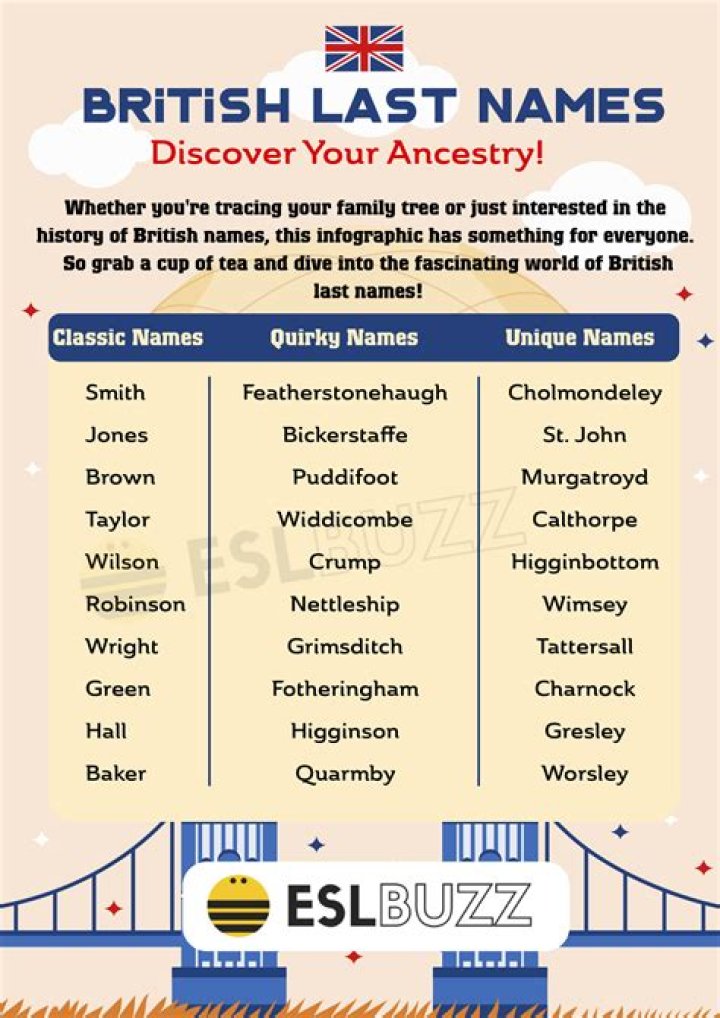
What's in a surname? More than you might think.
Surnames, or family names, are passed down from generation to generation, and they often carry with them a rich history and meaning. They can tell us about our ancestors' occupations, their place of origin, or even their physical characteristics.
The study of surnames, known as onomastics, can be a fascinating way to learn more about our heritage. By researching the meaning of our own surname, we can gain a deeper understanding of who we are and where we come from.
In addition to their historical and genealogical value, surnames can also be a source of pride and identity. They are a way for us to connect with our ancestors and feel a sense of belonging to a larger community.
Surnames Meanings
Surnames, or family names, are passed down from generation to generation, and they often carry with them a rich history and meaning. They can tell us about our ancestors' occupations, their place of origin, or even their physical characteristics.
- Historical: Surnames can provide a glimpse into the past, telling us about our ancestors' lives and experiences.
- Cultural: Surnames can reflect the culture and traditions of our ancestors.
- Geographical: Surnames can indicate where our ancestors came from.
- Occupational: Surnames can tell us about our ancestors' occupations.
- Physical: Surnames can sometimes be descriptive of our ancestors' physical characteristics.
- Personal: Surnames can also be chosen for personal reasons, such as to honor a family member or to reflect a particular value.
The study of surnames, known as onomastics, can be a fascinating way to learn more about our heritage. By researching the meaning of our own surname, we can gain a deeper understanding of who we are and where we come from. In addition to their historical and genealogical value, surnames can also be a source of pride and identity. They are a way for us to connect with our ancestors and feel a sense of belonging to a larger community.
Historical
Surnames are a valuable source of historical information. They can tell us about our ancestors' occupations, their social status, and even their religious beliefs. For example, the surname "Smith" is one of the most common surnames in the English-speaking world. It originally referred to someone who worked as a blacksmith.
- Occupations: Many surnames derive from the occupations of our ancestors. For example, the surname "Carpenter" originally referred to someone who worked as a carpenter.
- Social Status: Some surnames indicate the social status of our ancestors. For example, the surname "Lord" originally referred to someone who was a lord.
- Religious Beliefs: Some surnames indicate the religious beliefs of our ancestors. For example, the surname "Puritan" originally referred to someone who was a Puritan.
- Geographical Origins: Some surnames indicate the geographical origins of our ancestors. For example, the surname "Welsh" originally referred to someone who was from Wales.
By researching the meaning of our own surname, we can learn more about the lives and experiences of our ancestors. This can give us a deeper understanding of our own heritage and identity.
Cultural
Surnames can be a reflection of the culture and traditions of our ancestors. For example, in many cultures, surnames are passed down from father to son, and they often indicate the family's occupation or social status. In other cultures, surnames are chosen to reflect the family's religious beliefs or their geographical origins.
In some cases, surnames can even be used to identify a person's clan or tribe. For example, in Scotland, many surnames are based on the Gaelic word "mac," which means "son of." This indicates that the person's ancestors were part of a particular clan.
Surnames can also provide insights into the history of a particular culture or region. For example, the surname "Smith" is one of the most common surnames in the English-speaking world. This suggests that blacksmithing was a common occupation in England during the Middle Ages.
Understanding the cultural significance of surnames can help us to better understand our own heritage and identity. It can also help us to appreciate the diversity of cultures around the world.
Geographical
Surnames can provide valuable clues about our ancestors' geographical origins. This is especially true for surnames that are derived from place names. For example, the surname "French" originally referred to someone who came from France. Similarly, the surname "Welsh" originally referred to someone who came from Wales.
- Migration Patterns: Surnames can help us to track the migration patterns of our ancestors. For example, the surname "Garcia" is common in Spain and Portugal. This suggests that the Garcia family originally came from the Iberian Peninsula.
- Historical Events: Surnames can also provide insights into historical events. For example, the surname "Pilgrim" is common in England. This suggests that the Pilgrim family originally came to England from another country, possibly during the Middle Ages.
- Cultural Exchange: Surnames can also be a reflection of cultural exchange. For example, the surname "Chin" is common in both China and the United States. This suggests that there has been a significant amount of cultural exchange between these two countries.
- Identity: Surnames can also be a source of identity. For example, people with the surname " Patel" may feel a sense of connection to India, even if they have never been there.
Understanding the geographical origins of our surnames can help us to learn more about our heritage and identity. It can also help us to appreciate the diversity of cultures around the world.
Occupational
Occupational surnames are a valuable source of information about our ancestors' lives and experiences. They can tell us what our ancestors did for a living, and they can even provide clues about their social status and economic circumstances.
For example, the surname "Smith" is one of the most common surnames in the English-speaking world. It originally referred to someone who worked as a blacksmith. Similarly, the surname "Carpenter" originally referred to someone who worked as a carpenter, and the surname "Baker" originally referred to someone who worked as a baker.
Occupational surnames can also provide insights into the history of a particular trade or profession. For example, the surname "Weaver" is common in England and Scotland. This suggests that weaving was a common occupation in these countries during the Middle Ages.
Understanding the occupational origins of our surnames can help us to better understand our own heritage and identity. It can also help us to appreciate the diversity of occupations that our ancestors held.
In addition, occupational surnames can be a source of pride and inspiration. They can remind us of the hard work and dedication of our ancestors, and they can motivate us to achieve our own goals.
Physical
Surnames can sometimes be descriptive of our ancestors' physical characteristics. This is especially true for surnames that are derived from nicknames. For example, the surname "Short" may have originally been given to someone who was short in stature. Similarly, the surname "Long" may have originally been given to someone who was tall.
- Descriptive Surnames: Surnames can be used to describe a person's physical appearance, such as their height, weight, or hair color. For example, the surname "Brown" may have originally been given to someone who had brown hair.
- Nicknames: Surnames can also be derived from nicknames. For example, the surname "Little" may have originally been given to someone who was small in stature.
- Physical Characteristics: Surnames can also be used to describe a person's physical characteristics, such as their strength or agility. For example, the surname "Strong" may have originally been given to someone who was strong.
- Health Conditions: Surnames can also be used to describe a person's health conditions. For example, the surname "Sick" may have originally been given to someone who was often sick.
Understanding the physical origins of our surnames can help us to learn more about our heritage and identity. It can also help us to appreciate the diversity of physical characteristics that our ancestors possessed.
Personal
The choice of surname is often a deeply personal one. Some people choose to adopt the surname of a respected ancestor, while others choose a surname that reflects their own values or beliefs. For example, some people choose to adopt a surname that is associated with a particular culture or heritage. Others choose a surname that reflects their own personal interests or hobbies.
Personal surnames can be a source of great pride and identity. They can also be a way to connect with our ancestors and to pass on our own values to future generations.
Here are a few examples of personal surnames:
- Ancestry: Some people choose to adopt the surname of a respected ancestor. This can be a way to honor the ancestor's memory and to connect with our own heritage.
- Values: Some people choose a surname that reflects their own values or beliefs. For example, someone who values peace and harmony might choose the surname "Peace" or "Harmony."
- Culture: Some people choose a surname that is associated with a particular culture or heritage. For example, someone who is proud of their Irish heritage might choose the surname "O'Brien" or "Murphy."
- Interests: Some people choose a surname that reflects their own personal interests or hobbies. For example, someone who loves to play the piano might choose the surname "Piano" or "Musician."
Personal surnames are a unique and meaningful way to express our own identity and values. They can also be a way to connect with our ancestors and to pass on our own values to future generations.
FAQs about Surnames Meanings
Surnames, or family names, are passed down from generation to generation, and they often carry with them a rich history and meaning. They can tell us about our ancestors' occupations, their place of origin, or even their physical characteristics.
Here are some frequently asked questions about surnames meanings:
Question 1: What is the most common surname in the world?The most common surname in the world is Wang, which is a Chinese surname. It is estimated that over 92 million people in the world have the surname Wang.
Question 2: What is the origin of my surname?The origin of your surname depends on your ancestry. Surnames can be derived from occupations, places of origin, physical characteristics, or personal choices. You can research the meaning of your surname by looking it up in a surname dictionary or by contacting a genealogist.
Question 3: How can I change my surname?In most countries, you can change your surname by going through a legal process. The requirements for changing your surname vary from country to country. In some countries, you may need to have a valid reason for changing your surname, such as marriage, divorce, or adoption.
Question 4: What is the difference between a surname and a last name?In most English-speaking countries, the terms "surname" and "last name" are used interchangeably. However, in some countries, there is a distinction between the two terms. For example, in some European countries, the surname is the family name, and the last name is the given name.
Question 5: Why is it important to know the meaning of my surname?Knowing the meaning of your surname can help you to connect with your ancestors and to learn more about your heritage. It can also be a source of pride and identity.
Summary: Surnames are a valuable source of information about our ancestors and our heritage. By understanding the meaning of our surnames, we can gain a deeper understanding of who we are and where we come from.
Transition to the next article section: The next section of this article will discuss the history of surnames.
Conclusion
Surnames are a valuable source of information about our ancestors and our heritage. They can tell us about our ancestors' occupations, their place of origin, or even their physical characteristics. By understanding the meaning of our surnames, we can gain a deeper understanding of who we are and where we come from.
The study of surnames, known as onomastics, is a fascinating and rewarding field of study. It can help us to connect with our ancestors and to learn more about our own heritage. It can also be a source of pride and identity.
We encourage you to learn more about the meaning of your own surname. You may be surprised at what you discover.
Natalie Morales Relationship: Behind-the-Scenes Of Hollywood Love
Explore Stunning Nigerian Fashion Styles: A Cultural Kaleidoscope
Sarah Wayne Callies' Net Worth: A Detailed Exploration
A List Of The Most Popular US Surnames & Their Meanings Select Surnames
/most-common-us-surnames-1422656-FINAL-502840de1c8149cd9b6603efffd7d5ef.png)
100 Most Common US Surnames Origins and Meanings
What's a Surname? Can it Reveal Your Family’s Past?