
The Infamous John Gotti: A Mafia Kingpin's Reign
By Daniel Santos
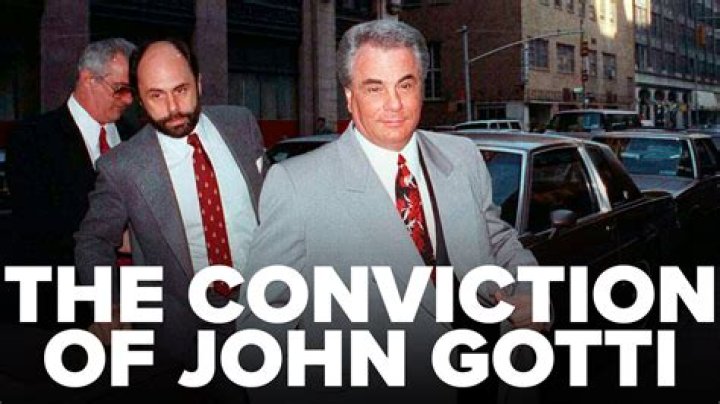
Who was the "Teflon Don"?
John Gotti, also known as the "Teflon Don", was an infamous American crime boss who led the Gambino crime family in New York City from 1985 to 1992.
Gotti gained notoriety for his flamboyant lifestyle, his ability to evade criminal convictions, and his ruthless tactics. He was known for his expensive suits, his gold jewelry, and his ever-present entourage of bodyguards. Gotti was also known for his public defiance of law enforcement, often making inflammatory statements and even attending his own trials in a limousine.
Despite being indicted on numerous racketeering and murder charges, Gotti was able to avoid conviction for many years. He earned the nickname "Teflon Don" because the charges against him seemed to "stick" to him.
Gotti's luck finally ran out in 1992 when he was convicted of racketeering, murder, and other charges. He was sentenced to life in prison and died in 2002.
John Gotti
John Gotti, also known as the "Teflon Don", was an infamous American crime boss who led the Gambino crime family in New York City from 1985 to 1992. He gained notoriety for his flamboyant lifestyle, his ability to evade criminal convictions, and his ruthless tactics.
- Crime boss: Gotti was the head of one of the most powerful crime families in the United States.
- "Teflon Don": Gotti earned this nickname because the charges against him seemed to "stick" to him.
- Flamboyant lifestyle: Gotti was known for his expensive suits, his gold jewelry, and his ever-present entourage of bodyguards.
- Public defiance: Gotti was not afraid to speak his mind, even when it meant criticizing law enforcement.
- Murder: Gotti was convicted of ordering the murder of Paul Castellano, the former head of the Gambino crime family.
- Racketeering: Gotti was also convicted of racketeering, which is a crime that involves using a pattern of illegal activity to obtain money or property.
- Life sentence: Gotti was sentenced to life in prison in 1992 and died in 2002.
These key aspects of John Gotti's life and career help to explain why he was such a notorious figure. He was a ruthless and powerful crime boss who was able to evade justice for many years. However, his luck eventually ran out and he was sentenced to life in prison.
| Name | Born | Died | Occupation |
|---|---|---|---|
| John Gotti | October 27, 1940 | June 10, 2002 | Crime boss |
Crime boss
John Gotti's status as a crime boss was a key factor in his life and career. As the head of the Gambino crime family, Gotti had access to vast resources and power. He used this power to control a wide range of criminal activities, including racketeering, extortion, and murder.
Gotti's position as a crime boss also gave him a great deal of influence over the political and economic life of New York City. He was able to use his power to corrupt public officials and businesses, and to intimidate anyone who dared to oppose him.
Gotti's reign as a crime boss came to an end in 1992 when he was convicted of racketeering, murder, and other charges. He was sentenced to life in prison and died in 2002.
"Teflon Don"
John Gotti's nickname, the "Teflon Don", was a reference to his ability to avoid criminal convictions for many years. Despite being indicted on numerous racketeering and murder charges, Gotti was able to evade conviction time and time again.
There were several factors that contributed to Gotti's ability to avoid conviction. First, Gotti was very careful about the crimes he committed. He rarely got involved in drug trafficking or other activities that would have brought him into contact with federal law enforcement. Second, Gotti had a very loyal crew of followers who were willing to lie for him and take the fall for him if necessary.
Gotti's luck finally ran out in 1992 when he was convicted of racketeering, murder, and other charges. He was sentenced to life in prison and died in 2002.
The "Teflon Don" nickname is a reminder that even the most powerful criminals can eventually be brought to justice. It is also a reminder of the importance of having a strong and independent justice system.
Flamboyant lifestyle
John Gotti's flamboyant lifestyle was a key part of his persona. He was known for his expensive suits, his gold jewelry, and his ever-present entourage of bodyguards. This lifestyle helped to create an image of power and wealth, which was essential to Gotti's success as a crime boss.
Gotti's flamboyant lifestyle also served a practical purpose. His expensive suits and jewelry were a way to display his wealth and power. His entourage of bodyguards served to protect him from his enemies.
Gotti's flamboyant lifestyle was a reflection of his personality. He was a man who loved to be the center of attention. He enjoyed the finer things in life and he was not afraid to show it.
Gotti's flamboyant lifestyle came to an end in 1992 when he was convicted of racketeering, murder, and other charges. He was sentenced to life in prison and died in 2002.
Public defiance
John Gotti's public defiance was a key part of his persona. He was not afraid to speak his mind, even when it meant criticizing law enforcement. This defiance helped to create an image of Gotti as a fearless leader who was not afraid to stand up for what he believed in.
- Challenging authority
Gotti was not afraid to challenge authority, even when it meant criticizing law enforcement. He often made inflammatory statements about the police and the FBI, and he even attended his own trials in a limousine.
- Media manipulation
Gotti was a master of media manipulation. He knew how to use the media to his advantage, and he often used it to attack his enemies and promote his own image.
- Public support
Gotti had a lot of public support, especially in his home neighborhood of Howard Beach, Queens. This support helped to protect him from law enforcement and gave him a sense of legitimacy.
- Downfall
Gotti's public defiance eventually led to his downfall. His inflammatory statements and media manipulation alienated many people, and his public support began to dwindle. This made it easier for law enforcement to bring him down.
John Gotti's public defiance was a complex and multifaceted phenomenon. It was a reflection of his personality, his media savvy, and his public support. Ultimately, it was this defiance that led to his downfall.
Murder
The murder of Paul Castellano was a watershed moment in the life of John Gotti. Castellano was the longtime boss of the Gambino crime family, and his murder paved the way for Gotti to take over the family.
Gotti had long been ambitious, and he saw the murder of Castellano as his opportunity to seize power. He carefully planned the hit, and on December 16, 1985, Castellano was gunned down outside a Manhattan steakhouse.
The murder of Castellano sent shockwaves through the underworld. It was a brazen act of violence that showed that Gotti was not afraid to challenge the status quo. It also showed that Gotti was a ruthless and ambitious man who was willing to do whatever it took to achieve his goals.
Gotti's conviction for the murder of Castellano was a major victory for law enforcement. It was a sign that even the most powerful criminals can be brought to justice. It also showed that the Gambino crime family was not invincible, and that it could be defeated.
The murder of Paul Castellano is a reminder that violence is never the answer. It is also a reminder that even the most powerful criminals can be brought to justice.
Racketeering
Racketeering was a major part of John Gotti's criminal career. He used his position as head of the Gambino crime family to engage in a wide range of illegal activities, including extortion, robbery, and murder.
- Extortion
Gotti and his crew extorted money from businesses and individuals throughout New York City. They would threaten violence or other harm if their victims did not pay up.
- Robbery
Gotti's crew also robbed banks, armored cars, and other businesses. They were known for their violence and ruthlessness.
- Murder
Gotti ordered the murders of several people, including Paul Castellano, the former boss of the Gambino crime family. Gotti's murders were often carried out in a public and brutal manner.
Gotti's racketeering activities brought him a great deal of wealth and power. He used this wealth and power to control a wide range of legitimate businesses, including construction companies, nightclubs, and restaurants.
Gotti's racketeering conviction was a major victory for law enforcement. It showed that even the most powerful criminals can be brought to justice. It also showed that the Gambino crime family was not invincible.
Life sentence
The life sentence imposed on John Gotti in 1992 marked a significant turning point in his life and career. After years of evading justice, Gotti was finally convicted of racketeering, murder, and other charges. He was sentenced to life in prison without the possibility of parole. Gotti died in prison in 2002 at the age of 61.
Gotti's life sentence was a major victory for law enforcement and a sign that even the most powerful criminals can be brought to justice. It also marked the end of an era for the Gambino crime family, which had been under Gotti's control for nearly two decades.
The life sentence imposed on Gotti is a reminder that crime does not pay. It is also a reminder of the importance of a strong and independent justice system.
FAQs about John Gotti
This section provides answers to frequently asked questions about John Gotti, an infamous American crime boss.
Question 1: Who was John Gotti?John Gotti was a notorious American crime boss who led the Gambino crime family in New York City from 1985 to 1992. He was known for his flamboyant lifestyle, his ability to evade criminal convictions, and his ruthless tactics.
Question 2: Why was John Gotti called the "Teflon Don"?
Gotti earned the nickname "Teflon Don" because the charges against him seemed to "stick" to him. He was able to avoid criminal convictions for many years due to a combination of factors, including careful planning, a loyal crew, and a savvy legal team.
Question 3: What was John Gotti's involvement in the murder of Paul Castellano?
Gotti ordered the murder of Paul Castellano, the former head of the Gambino crime family, in 1985. This brazen act of violence paved the way for Gotti to take over the family.
Question 4: What crimes was John Gotti convicted of?
Gotti was convicted of racketeering, murder, and other charges in 1992. His racketeering activities included extortion, robbery, and murder.
Question 5: What was John Gotti's sentence?
Gotti was sentenced to life in prison without the possibility of parole in 1992. He died in prison in 2002.
Question 6: What is John Gotti's legacy?
John Gotti is remembered as one of the most powerful and ruthless crime bosses in American history. His flamboyant lifestyle and ability to evade justice for so long made him a larger-than-life figure.
This concludes the FAQs about John Gotti.
Transition to the next article section: John Gotti's criminal career was marked by violence, corruption, and a ruthless pursuit of power. Despite his ability to evade justice for many years, Gotti was eventually brought to justice and sentenced to life in prison.
Conclusion
John Gotti's life and career provide a cautionary tale about the dangers of organized crime. Gotti's rise to power was fueled by violence, corruption, and a ruthless pursuit of power. He was able to evade justice for many years, but he was eventually brought down by the combined efforts of law enforcement and the FBI.
Gotti's story is a reminder that crime does not pay. It is also a reminder of the importance of a strong and independent justice system.
The Ultimate Burst Fade With Short Hair On Top: Your Guide To Style
Titans Among Us: Unlocking Titus Welliver's Towering Stature
Explore Stunning Nigerian Fashion Styles: A Cultural Kaleidoscope
John Gotti Biography Facts, Childhood, Family Life & Achievements
John Gotti Biography Childhood, Life Achievements & Timeline
10 Unbelievable Facts About John Gotti The List Love