Top Vampire Names
By Daniel Santos
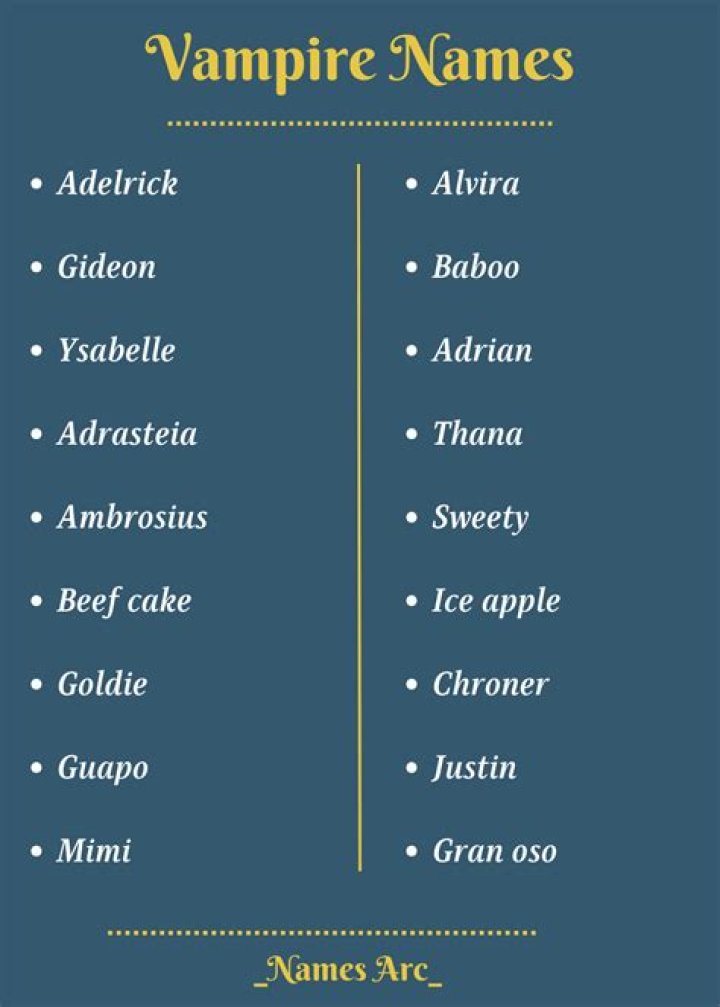
Top vampire names refer to the most popular and recognizable names given to vampires in literature, film, and folklore.
These names often carry specific meanings or associations, and they can play an important role in establishing the character's personality and motivations. Some of the most famous top vampire names include Dracula, Vlad the Impaler, Lestat de Lioncourt, and Barnabas Collins.
The use of top vampire names can help to create a sense of mystery and intrigue around a character. It can also help to connect the character to a particular time period or culture. In some cases, top vampire names can even become synonymous with the vampire genre itself.
Top Vampire Names
Top vampire names are those that are most commonly used in literature, film, and folklore. They often carry specific meanings or associations, and they can play an important role in establishing a character's personality and motivations.
- Popularity: Top vampire names are popular for a reason. They are often associated with well-known and iconic vampire characters, which can make them more recognizable and appealing to readers and viewers.
- Meaning: Top vampire names often have specific meanings or associations. For example, the name "Dracula" is derived from the Romanian word for "devil," while the name "Lestat" is thought to be derived from the French word for "vampire."
- Culture: Top vampire names can also be influenced by culture. For example, the name "Vlad the Impaler" is associated with the Romanian ruler Vlad III Dracula, who was known for his cruelty and impaling his enemies.
- Time period: Top vampire names can also be associated with specific time periods. For example, the name "Barnabas Collins" is associated with the 1960s gothic soap opera Dark Shadows.
- Genre: Top vampire names can also be associated with specific genres of vampire fiction. For example, the name "Lestat de Lioncourt" is associated with the Anne Rice vampire chronicles, which are known for their erotic and supernatural themes.
- Originality: While many top vampire names are well-known and iconic, there are also many original and unique vampire names that can be found in literature and film. These names can help to create a sense of mystery and intrigue around a character, and they can also help to connect the character to a particular time period or culture.
Ultimately, the best top vampire name for a particular character will depend on a variety of factors, including the character's personality, motivations, and the overall tone and style of the work in which they appear.
Popularity
The popularity of top vampire names is closely connected to their association with well-known and iconic vampire characters. These characters have been featured in popular books, movies, and TV shows, and their names have become synonymous with the vampire genre. For example, the name "Dracula" is instantly recognizable to most people, even those who have never read the novel or seen the film. This is because Dracula is one of the most famous and iconic vampire characters in history.
When authors and filmmakers use top vampire names for their characters, they are tapping into the popularity and recognition of these names. This can help to make their characters more appealing to readers and viewers, who are already familiar with and interested in the vampire genre. In addition, using a top vampire name can help to create a sense of mystery and intrigue around a character, as it suggests that they may be connected to the rich history and lore of vampires.
Of course, there are also many original and unique vampire names that can be found in literature and film. These names can be just as effective as top vampire names, but they may require a bit more explanation to help readers and viewers understand their significance. Ultimately, the best vampire name for a particular character will depend on a variety of factors, including the character's personality, motivations, and the overall tone and style of the work in which they appear.
Meaning
The meanings and associations of top vampire names can vary widely, but they often provide important insights into the character's personality and motivations. For example, the name "Dracula" is derived from the Romanian word for "devil," which suggests that the character is evil and malevolent. The name "Lestat," on the other hand, is thought to be derived from the French word for "vampire," which suggests that the character is a creature of the night with supernatural powers.
- Cultural Influences: Many top vampire names are derived from different cultures and languages. For example, the name "Vlad the Impaler" is derived from the Romanian ruler Vlad III Dracula, who was known for his cruelty and impaling his enemies. The name "Carmilla" is derived from the Irish vampiress in the novella of the same name by Sheridan Le Fanu.
- Historical Context: Some top vampire names are associated with specific historical figures or events. For example, the name "Elizabeth Bthory" is derived from the Hungarian countess who was accused of killing hundreds of young women in the 16th century. The name "Gilles de Rais" is derived from the French nobleman who was executed for heresy and murder in the 15th century.
- Literary Influences: Many top vampire names are derived from literature. For example, the name "Lestat de Lioncourt" is derived from the vampire character in Anne Rice's novel Interview with the Vampire. The name "Count Orlok" is derived from the vampire character in the 1922 film Nosferatu.
- Originality: While many top vampire names are derived from existing sources, there are also many original and unique vampire names that have been created by authors and filmmakers. These names can be just as effective as top vampire names, but they may require a bit more explanation to help readers and viewers understand their significance.
Ultimately, the meaning and association of a top vampire name can vary depending on the context in which it is used. However, these names can provide important insights into the character's personality, motivations, and backstory.
Culture
Culture plays a significant role in shaping top vampire names. This is because vampires are often seen as reflections of the fears and anxieties of the culture in which they are created. For example, the name "Vlad the Impaler" is associated with the Romanian ruler Vlad III Dracula, who was known for his cruelty and impaling his enemies. This name reflects the fear and terror that Dracula inspired in his own time.
Other top vampire names are also influenced by culture. For example, the name "Carmilla" is derived from the Irish vampiress in the novella of the same name by Sheridan Le Fanu. This name reflects the fear of female sexuality that was prevalent in Victorian Ireland.
Understanding the cultural influences on top vampire names can help us to better understand the vampire genre as a whole. It can also help us to understand the fears and anxieties of the cultures that created these names.
Time period
Top vampire names can also be associated with specific time periods. This is because the vampire genre has evolved over time, and the names of vampires have changed to reflect the changing tastes and values of society.
- Historical Influences: Many top vampire names are influenced by historical figures. For example, the name "Vlad the Impaler" is associated with the Romanian ruler Vlad III Dracula, who was known for his cruelty and impaling his enemies. The name "Elizabeth Bthory" is associated with the Hungarian countess who was accused of killing hundreds of young women in the 16th century.
- Gothic Era: The Gothic era, which spanned from the late 18th century to the mid-19th century, saw a rise in popularity of vampire fiction. Many of the top vampire names from this era reflect the dark and romantic themes of Gothic literature. For example, the name "Carmilla" is derived from the Irish vampiress in the novella of the same name by Sheridan Le Fanu. The name "Count Dracula" is derived from the vampire character in Bram Stoker's novel Dracula.
- Modern Era: The modern era of vampire fiction began in the 20th century and continues to the present day. Many of the top vampire names from this era reflect the changing tastes and values of society. For example, the name "Lestat de Lioncourt" is derived from the vampire character in Anne Rice's novel Interview with the Vampire. The name "Buffy Summers" is derived from the vampire slayer character in the television series Buffy the Vampire Slayer.
Understanding the connection between time period and top vampire names can help us to better understand the vampire genre as a whole. It can also help us to understand the changing tastes and values of society over time.
Genre
The genre of a vampire story can have a significant impact on the names of the vampires in the story. For example, in gothic vampire fiction, the names of vampires are often dark and romantic, such as "Dracula" and "Carmilla." In erotic vampire fiction, the names of vampires are often sensual and seductive, such as "Lestat de Lioncourt" and "Marius de Romanus." In horror vampire fiction, the names of vampires are often terrifying and menacing, such as "Nosferatu" and "The Master."
Understanding the connection between genre and top vampire names can help us to better understand the vampire genre as a whole. It can also help us to choose the right names for our own vampire characters.
Here are some examples of top vampire names associated with different genres of vampire fiction:
- Gothic vampire fiction: Dracula, Carmilla, Count Orlok, Elizabeth Bthory
- Erotic vampire fiction: Lestat de Lioncourt, Marius de Romanus, Armand, Santino
- Horror vampire fiction: Nosferatu, The Master, Deacon Frost, Blade
When choosing a name for your vampire character, it is important to consider the genre of your story. The name should be consistent with the tone and atmosphere of the story, and it should help to create the desired effect on the reader.
Originality
In the realm of vampire fiction, originality is a key ingredient for creating memorable and engaging characters. While many authors choose to use well-known and iconic vampire names, there are also many who opt for original and unique names that can help to set their characters apart.
- Creating a Sense of Mystery and Intrigue: Original vampire names can help to create a sense of mystery and intrigue around a character. When readers or viewers encounter a vampire with a unique name, they are more likely to be curious about the character's backstory and motivations. For example, the name "Lestat de Lioncourt" from Anne Rice's Vampire Chronicles is a unique and memorable name that immediately piques the reader's interest.
- Connecting the Character to a Particular Time Period or Culture: Original vampire names can also help to connect the character to a particular time period or culture. For example, the name "Vlad the Impaler" is a historical figure who was known for his cruelty. Using this name for a vampire character can help to create a sense of authenticity and realism.
- Standing Out from the Crowd: In a genre that is filled with iconic characters, it can be difficult to make your vampire character stand out. Using an original name can help to set your character apart from the rest and make them more memorable to readers or viewers.
- Reflecting the Character's Personality: An original vampire name can also be a way to reflect the character's personality. For example, a vampire with a dark and brooding personality might have a name like "Shadow" or "Night."
Ultimately, the decision of whether to use a well-known and iconic vampire name or an original name is up to the author. However, using an original name can be a great way to create a unique and memorable character that will stand out from the crowd.
FAQs on "Top Vampire Names"
The following are some frequently asked questions about top vampire names, along with their answers:
Question 1: What are the most popular vampire names?
Answer: Some of the most popular vampire names include Dracula, Lestat, Vlad the Impaler, and Barnabas Collins.
Question 2: What do vampire names often represent?
Answer: Vampire names often have specific meanings or associations. For example, the name "Dracula" is derived from the Romanian word for "devil," while the name "Lestat" is thought to be derived from the French word for "vampire."
Question 3: How can vampire names be influenced by culture?
Answer: Vampire names can be influenced by culture in a number of ways. For example, the name "Vlad the Impaler" is associated with the Romanian ruler Vlad III Dracula, who was known for his cruelty and impaling his enemies.
Question 4: How do vampire names reflect the time period in which they are created?
Answer: Vampire names can reflect the time period in which they are created in a number of ways. For example, the name "Barnabas Collins" is associated with the 1960s gothic soap opera Dark Shadows.
Question 5: How can vampire names be used to create unique and memorable characters?
Answer: Original and unique vampire names can help to create unique and memorable characters. For example, the name "Lestat de Lioncourt" from Anne Rice's Vampire Chronicles is a unique and memorable name that immediately piques the reader's interest.
Question 6: What are some tips for choosing a vampire name?
Answer: When choosing a vampire name, it is important to consider the genre of your story, the character's personality, and the overall tone and atmosphere of the story.
By understanding the different factors that can influence vampire names, you can choose the perfect name for your own vampire character.
...
Tips for Choosing Top Vampire Names
Choosing the right name for your vampire character is an important part of creating a memorable and engaging character. Here are five tips to help you choose the perfect top vampire name:
Tip 1: Consider the Genre of Your Story
The genre of your story will have a big impact on the type of vampire name that you choose. For example, if you are writing a gothic vampire story, you might want to choose a name that is dark and romantic, such as "Dracula" or "Carmilla." If you are writing a more modern vampire story, you might want to choose a name that is more contemporary, such as "Lestat" or "Buffy."
Tip 2: Consider the Character's Personality
The vampire's personality should also play a role in choosing a name. For example, a vampire who is dark and brooding might have a name like "Shadow" or "Night." A vampire who is more playful and mischievous might have a name like "Trick" or "." Remember, connotation matters, so be thoughtful with this.
Tip 3: Consider the Overall Tone and Atmosphere of the Story
The overall tone and atmosphere of your story will also influence the type of vampire name that you choose. For example, if you are writing a story that is dark and suspenseful, you might want to choose a name that is more menacing, such as "Nosferatu" or "The Master." If you are writing a story that is more lighthearted and comedic, you might want to choose a name that is more playful, such as "Fangs" or "Twinkle."
Tip 4: Be Original
While there is nothing wrong with using a classic vampire name, such as "Dracula" or "Lestat," it can be more memorable to choose an original name. This will help your vampire character to stand out from the crowd and make a lasting impression on readers.
Tip 5: Have Fun
Choosing a vampire name should be a fun and creative process. Don't be afraid to experiment with different names until you find one that you love. After all, the perfect vampire name is the one that you feel best suits your character.
Remember, the most important thing is to choose a vampire name that you are happy with and that fits the character you have created.
...
Conclusion
In this article, we have explored the topic of "top vampire names." We have discussed the popularity, meaning, and cultural influences of these names. We have also provided tips for choosing a top vampire name for your own vampire character.
We hope that this article has been informative and helpful. We encourage you to use your creativity and imagination when choosing a name for your vampire character. After all, the perfect vampire name is the one that you feel best suits your character.
What Band Is Pete Wentz In
Ken Jeongs Wife
How Did Eslabon Armado Get Famous
Vampire Name Generator 356 Vampire Name Ideas
85 Awesome Vampire Names with Meaning and Origin (Male & Female)
Four popular vampire movies of all time by the national film board